
Injection transfer molding: The best of both worlds
Injection transfer molding of rubber is a manufacturing process used to produce complex rubber parts with high precision and high quality. This method combines the advantages of traditional injection molding and compression molding to create finished rubber products with the benefits of both processes.
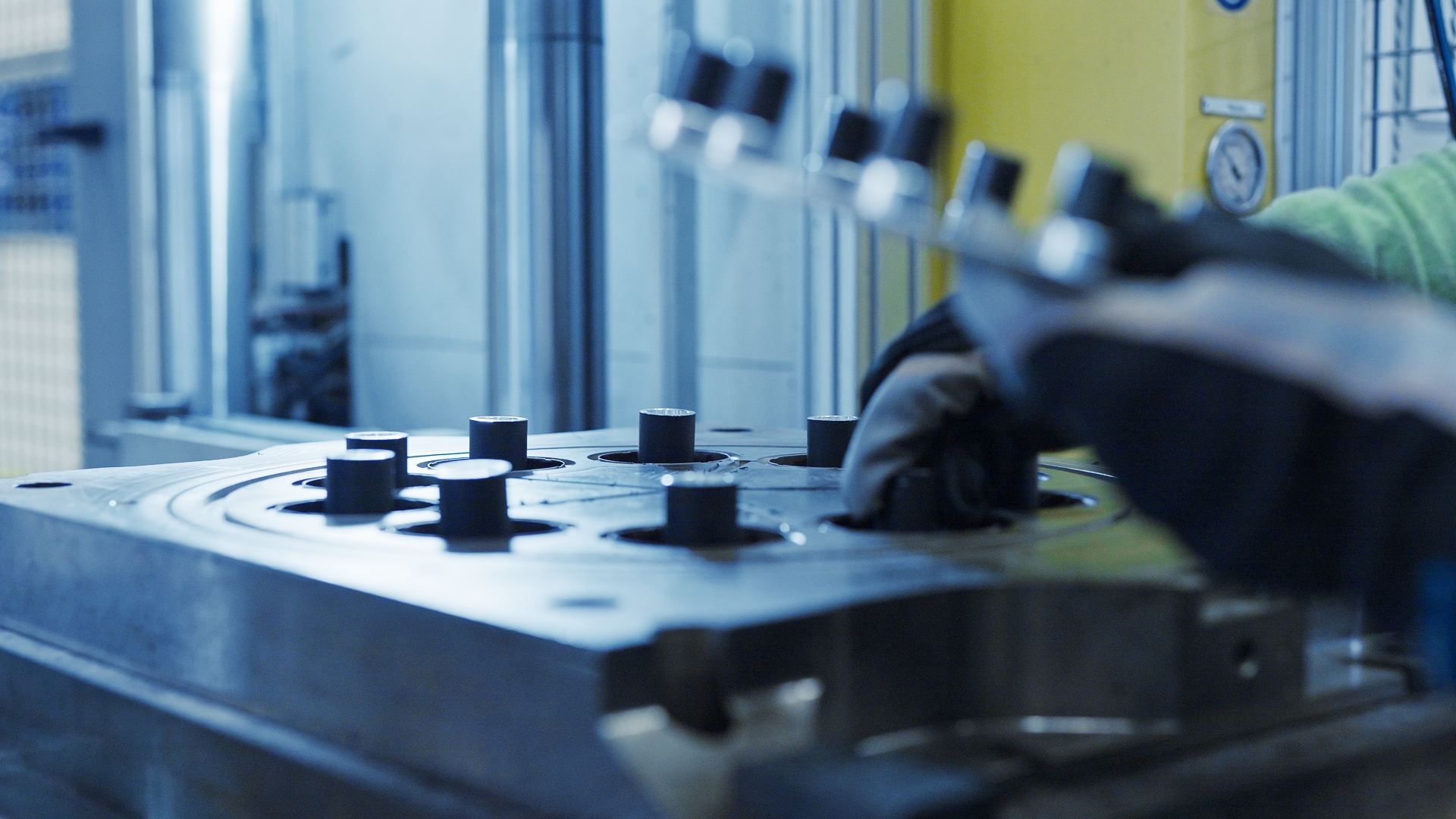
This is how injection-transfer molding works
Injection transfer molding of rubber is a manufacturing process used to produce complex rubber parts with high precision and high quality. This method combines the advantages of traditional injection molding and compression molding to create finished rubber products with the benefits of both processes.
The injection transfer molding process for rubber consists of several steps. First, an injection molding machine is prepared, equipped with two separate chambers. One chamber for melting and injecting the rubber, and one chamber for holding the rubber at the correct temperature.
The rubber is then fed into the chamber and melted into a viscous form. Once the rubber reaches the correct temperature, it is transferred to another chamber to maintain temperature until it is ready to be injected into the mold. This procedure allows the rubber to be kept in an optimal state before injection. When the rubber is ready for injection, it is forced into the mold cavities through the mold's injection channels. After the rubber has solidified, the mold is opened, and the rubber products are removed and inspected.
Advantages of injection-transfer molding:
1. Ability to manufacture complex geometries
2. High precision in the manufacturing of rubber products
3. More efficient use of rubber in terms of less waste
4. High production speed