
Rubber Material
Material - Different types of rubber
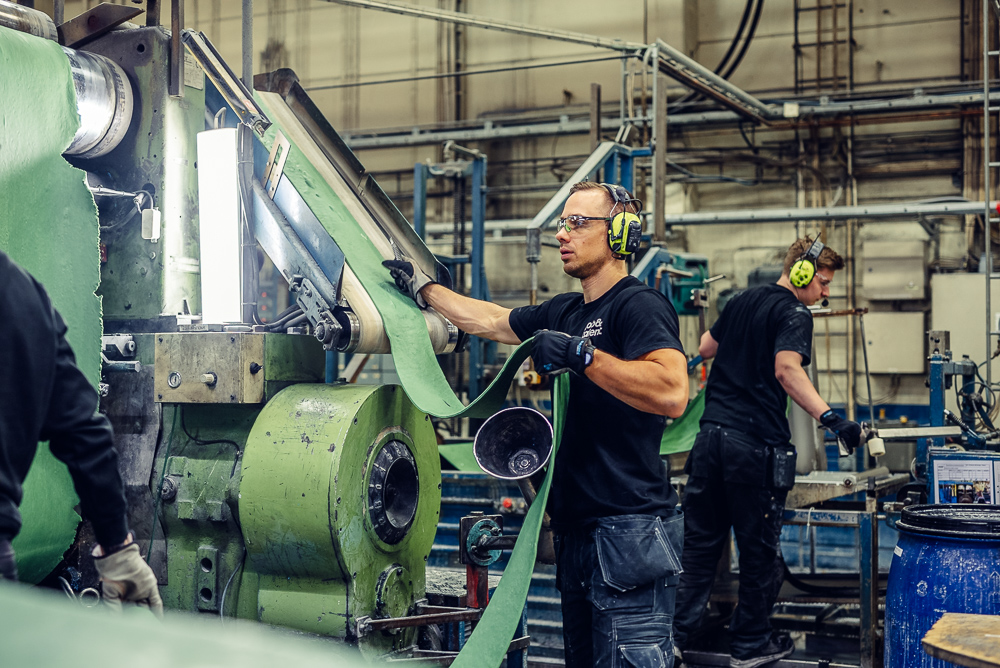
Rubber is a versatile material, and what makes rubber unique is its ability to combine elasticity, durability and resistance to external factors such as heat, cold, moisture,and chemicals.
To achieve the desired properties, it is important that the right polymer is chosen to give the rubber its unique characteristics. Each polymer has its own composition and characteristics, which makes it possible to customize the rubber for specific applications.
Below you have the opportunity to deepen your knowledge of the most common polymers in the industry, as well as specialty polymers used when looking for even more unique properties.
Every rubber material is made up of several different components that together form a recipe. The recipe, together with the rubber vulcanization process, is what gives the rubber product its properties.
Would you like to compare the properties of different polymers?
See our table here
Standard material
Here you can read more about the most common polymers which we call standard material.
Here you will have the opportunity to learn more about natural rubber, styrene-butadiene rubber, ethylene propylene rubber, butadiene rubber, and nitrile rubber.
Special material
This section describes polymers that are not as common but are often used when rubber with high-performance properties is sought.
Here you will have the opportunity to learn more about hydrogenated nitrile rubber, butyl rubber, chloroprene rubber, fluoroelastomer, and silicone rubber.
Chemistry
The recipe structure of rubber materials together with the vulcanization process, makes it possible to mold rubber products.
Recipe
The recipe structure for rubber forms the basis for rubber to obtain the desired properties.